

What the study found
The study found that the two burial phases at Bury in the Paris area represented largely discontinuous genetic groups, with different social organization inferred from three large pedigrees. The authors link this difference to a northward movement of Neolithic ancestry from the south that reached the Paris Basin after the Neolithic decline, around 2900 BC.
Why the authors say this matters
The authors conclude that these findings help explain population turnover at the end of the fourth millennium BC and may offer a possible explanation for the cessation of megalith building. The study suggests that the Paris Basin followed a different demographic pattern from Scandinavia, where Neolithic farmers were replaced by people with steppe ancestry.
What the researchers tested
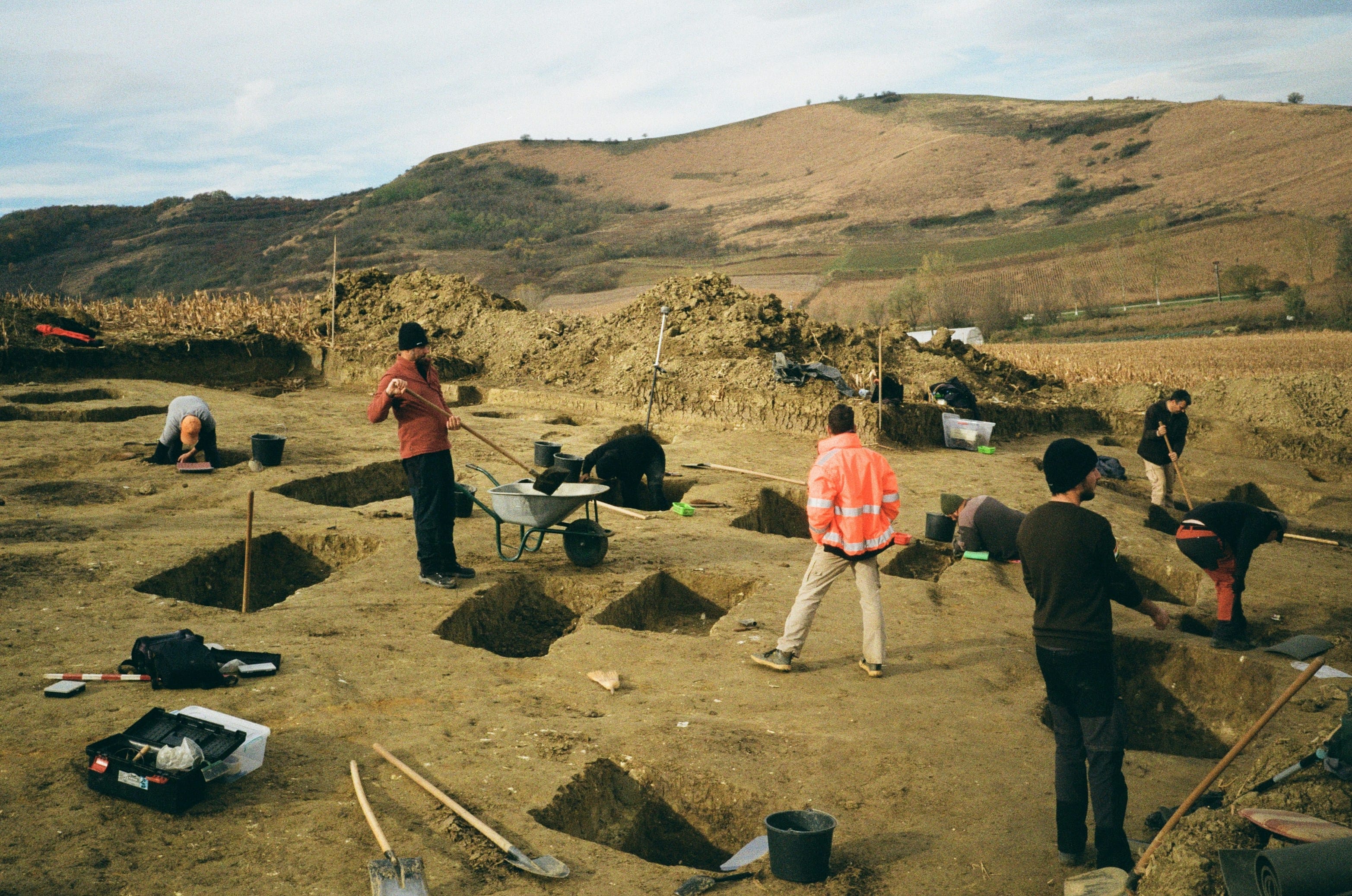
The researchers sequenced 132 ancient genomes from the allée sépulcrale at Bury, a burial site in present-day France. They compared two burial phases separated by a hiatus with no burial activity: one before the Neolithic decline, ending around 3000 BC, and a later phase in the early to mid-third millennium BC.
What worked and what didn't
The genomic data showed two largely discontinuous groups across the two phases. The study also reports evidence for three large pedigrees, infectious diseases such as Yersinia pestis and Borrelia recurrentis, and forest regrowth between the phases.
What to keep in mind
The abstract does not describe detailed limitations beyond the fact that the findings come from Bury and the Paris Basin. The proposed link to the end of megalith building is presented as a possible explanation, not a confirmed cause.
Key points
- The two burial phases at Bury were largely discontinuous genetically.
- The later phase is linked to a northward spread of Neolithic ancestry into the Paris Basin after the Neolithic decline.
- The researchers sequenced 132 ancient genomes from Bury.
- Three large pedigrees suggested different social organization between the burial phases.
- The dataset also included evidence of infectious diseases and forest regrowth between phases.
Disclosure
- Research title:
- Bury genomes show a population turnover in the Paris Basin
- Authors:
- Frederik Valeur Seersholm, Abigail Ramsøe, Jialu Cao, P. Chambon, Karl-Göran Sjögren, Hugh McColl, Fabrice Demeter, Charleen Gaunitz, Lasse Vinner, Jesper Stenderup, Gabriele Scorrano, Ralph Fyfe, T. Douglas Price, Morten Fischer Mortensen, Sascha Krüger, Torben Dehn, Svend Illum Hansen, Kristine Vesterdorf, Thorfinn Sand Korneliussen, Morten E. Allentoft, Kristian Kristiansen, Laure Salanova, Eske Willerslev, Martin Sikora
- Institutions:
- University of Copenhagen, Centre National de la Recherche Scientifique, Musée de l'Homme, University of Gothenburg, Université Paris Cité, University of Rome Tor Vergata, University of Plymouth, University of Wisconsin–Madison, National Museum of Denmark, KSL Consulting (Denmark), The University of Western Australia, Curtin University, University of Bremen, University of Cambridge
- Publication date:
- 2026-04-03
- OpenAlex record:
- View
Get the weekly research newsletter
Stay current with peer-reviewed research without reading academic papers — one filtered digest, every Friday.