

What the study found
Teacher co-design of the Play with AI curriculum was associated with substantial increases in teachers’ confidence and pedagogical agency. The study also identified four design principles for early AI literacy: embodied play, tangible coding, guided dialogue, and teacher co-design.
Why the authors say this matters
The authors conclude that the findings offer empirically grounded design knowledge for early AI education and practical guidance for integrating AI literacy through play-based, ethical, and collaborative pedagogy. They also say the work aligns with the AI4K12 Initiative and NAEYC frameworks.
What the researchers tested
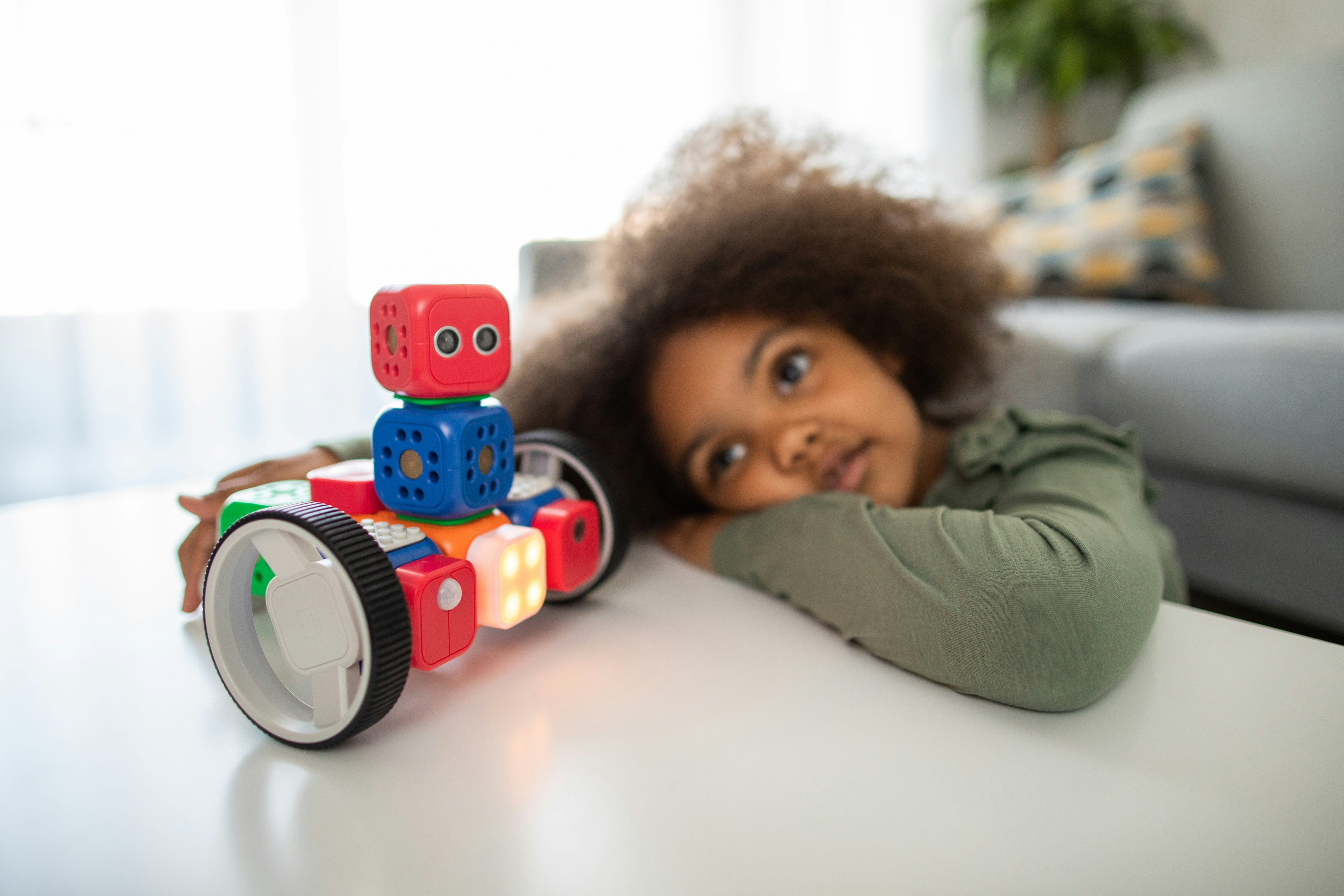
The researchers used a design-based research approach to design, implement, and refine a seven-activity Play with AI curriculum for pre-kindergarten and kindergarten children. Two pre-K and two kindergarten teachers co-designed, piloted, and refined activities that included unplugged play, tangible coding with robots such as Bee-Bot or Ozobot, and guided dialogue with a social AI robot.
What worked and what didn't
Across iterative cycles, the study reports qualitative and formative evidence of teacher adaptation, children’s emerging reasoning, and improved teacher ownership of the curriculum. Quantitative tallies and observational rubrics were used only as descriptive indicators for refinement, not as validated outcome measures or statistically generalizable learning gains.
What to keep in mind
The abstract states that the findings are formative and qualitative, with descriptive quantitative indicators rather than validated or generalizable outcome measures. The available summary does not describe specific limitations beyond that scope.
Key points
- The Play with AI curriculum was designed for pre-kindergarten and kindergarten children.
- Teacher co-design was linked to higher confidence, pedagogical agency, and curriculum ownership.
- Four design principles emerged: embodied play, tangible coding, guided dialogue, and teacher co-design.
- The curriculum included unplugged play, coding robots, and dialogue with a social AI robot.
- The reported evidence was formative and qualitative rather than statistically generalizable.
Disclosure
- Research title:
- Play-based AI curriculum increased teacher confidence
- Authors:
- Joohi Lee
- Institutions:
- The University of Texas at Arlington
- Publication date:
- 2026-03-07
- OpenAlex record:
- View
Get the weekly research newsletter
Stay current with peer-reviewed research without reading academic papers — one filtered digest, every Friday.